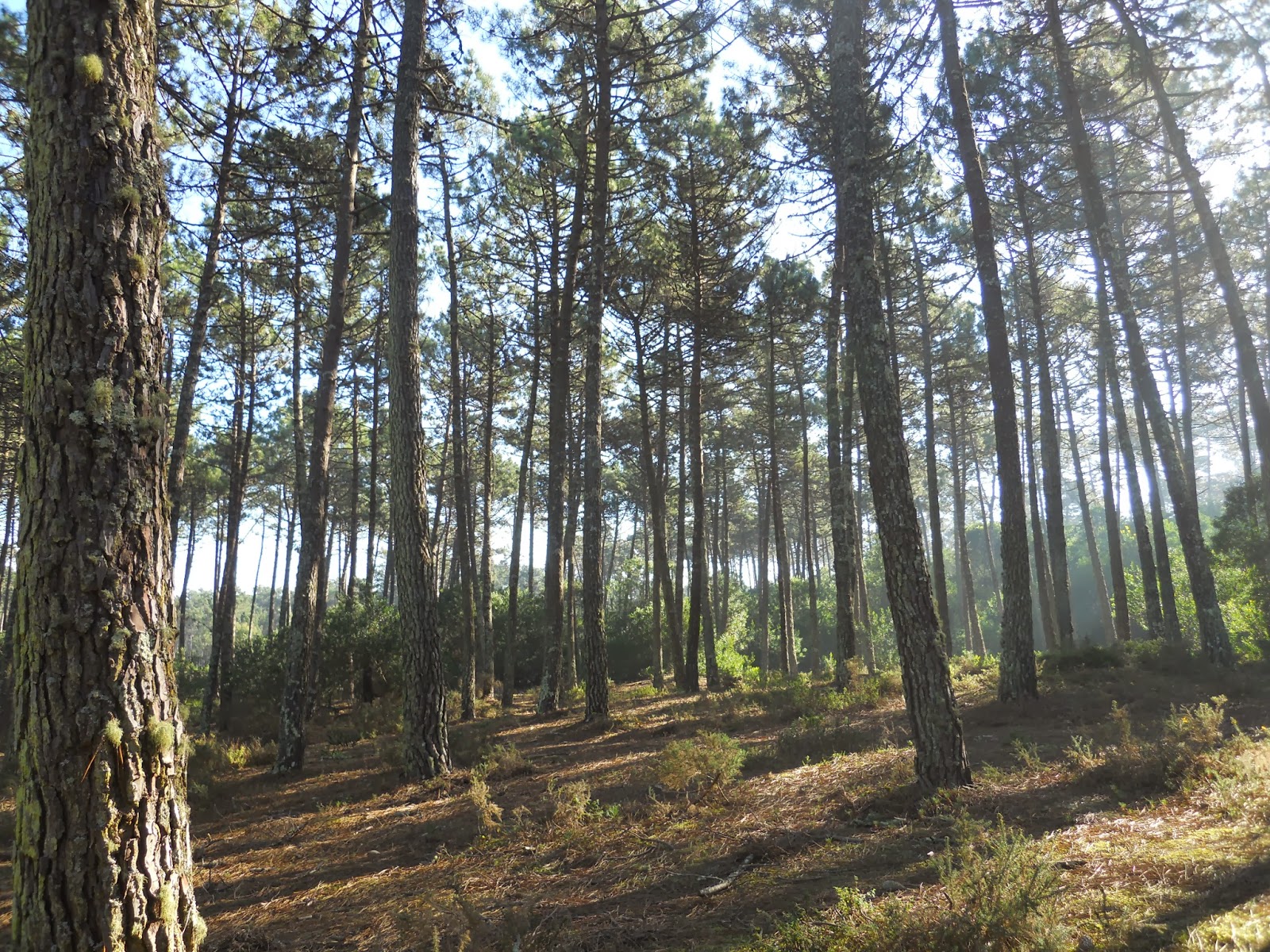
Adoro o Outono! E sei que a Primavera está aí mas o Sol tem andado escondido há uns meses e este Outono teve dias fenomenais com o frio a bater à porta, com o orvalho a espreitar pela manhã e o Sol para aquecer com a sua luz. Trouxe-me saudades do Sol!
Apesar do frio, esta é uma das minhas épocas favoritas para "estar cá fora". E arranjo todas as desculpas possíveis. Com o fim do Outono chega o tempo de acender a lareira e tal como os outros seres vivos, nós preparamos os recursos para o tempo frio. Apanhar pinhas e pequenos ramos para a lareira pode mesmo ser bom como momento de relaxamento, de contacto com a Natureza e claro um bom contributo para limpeza das florestas.
E eu estou a tentar aproveitar ao máximo estes momentos felizes destas coisas simples porque são eles que constroem a minha felicidade.
I love the fall! I know that Spring is on the corner but, the Sun has hidden for several months and the last Autumn had glorious sunny days, the cold knocking at the door, the dew peeking in the morning and the Sun warming the day with its light. It makes me miss the Sun, so much!
Despite the cold, this is one of my favorite times "to be outside". And I get every possible excuses. When the fall ends starts the time to use the fireplace so, as every living being, during the autumn we must prepare our resources to the winter. Pick pine cones and small branches for the fireplace is a good exercise to relax, contact with nature and, of course, a little help to clean our forests.
And I am trying to absorb the happy moments from this simple things since those are the moments that make my happiness. (Photos: Eunice Sousa)
Por vezes parece que não somos capazes de nada: o mundo diz-nos constantemente que não somos suficientemente bons e, mais ainda, tenta moldar-nos dentro de uma homogeneidade de personalidades. Para sermos felizes é, no entanto, necessário que não nos deixemos levar por esta onda, caso contrário estaremos condenados a ver a vida passar-nos ao lado. Definir os nosso princípios, valorizar o que temos e o que somos, traçar pequenos caminhos para, aos poucos, realizar os nossos sonhos e valorizar as pequenas vitórias são alguns "must do" do caminho para a felicidade!
Como inspiração partilho uma TED talk da autoria de Lizze Velasquez que soube por ao seu serviço todos os recursos que tinha à sua volta para ter a vida com que sonhou. Parecemos uns sortudos agora, não é?
Sometimes it seems that we are not able to do anything: the world tells us constantly that we are not good enough and, even more, it tries to transform everyone into a homogeneous personality. To be happy is, however, necessary let this train pass, otherwise we are condemned to see your life pass unnoticed. Define our principles, the values that we have and what we are, outline small steps to realize our dreams and enjoy the small victories: those are some "must do" to happiness!
As inspiration, I share a TED talk by Lizze Velasquez who used all the resources she had to serve her dream life. We seem lucky now, don't we?
Investir em experiências nem sempre é fácil. Pequenas ou grandes são elas que nos fazem crescer. Viajar sempre esteve nos meus desejos mais altos mas por vezes é mais fácil "ter coisas" em vez de fazer o esforço de promover e gozar uma boa experiência. Estou a fazer um esforço por mudar isso... nos primeiros passos... por vezes é preciso um empurrão, mesmo que não se mereça!
Invest in experiences isn't always easy. Little or big, experiences make us grow. Travel has always been in my highest dreams but, sometimes is easiest to "have things" than make an effort to live and enjoy a great experience. I am trying to change that... on the first steps... sometimes you need that puxe, even you don't deserve it!
Ainda a propósito de fazer malas, a Louis Vuitton criou uma pequena aplicação interactiva no seu site chamada "The Art of Packing" onde pode aprender a dobrar correctamente a roupa assim como organizar a mala para viajar.
Para além de poder experimentar dobrando e colocando os itens na mala, cada passo de organização é acompanhado por uma dica sobre onde colocar cada tipo de objecto na sua mala.
É claro que os itens apresentados são da marca em questão mas a uniformidade das malas na maior parte das marcas faz como que estas dicas sejam úteis para todos aqueles que pretendem viajar incluindo na sua bagagem todos os itens de que precisa devidamente acondicionados. Querem experimentar?
Still about packing, Louis Vuitton created a small interactive application in its website called "The Art of Packing" where you can learn to correctly fold your clothes as well as packing them for travel.
In addition to the possibility of you to try to fold and pack the items, each organization step is accompained by a tip about where to put each type of object in your baggage.
The items in the site are, of course, from Louis Vuitton. But the uniformity of forms and sizes of the generality of bagages make it suitable for all who want to travel with their items properly packed in the suitcase. Want to try?
Adoro fazer bolachas! Se há algo reconfortante em passar uma tarde na cozinha enquanto a chuva forte cai lá fora são bolachas acabadas de fazer. Mas nem sempre temos tempo ou disposição para esticar a massa e usar forminhas bonitas para cortar as bolachas e esperar que a massa não se tenha colado à bancada! Porque por vezes isso acontece.
Estas bolachinhas de farinha de milho são rápidas de fazer, a massa não precisa de ir ao frigorífico, moldam-se facilmente em letras e outras formas com as mãos daqueles que quiserem participar. Depois é só cozer e deixar arrefecer. São leves, com uma cor amarela muito suave, de sabor inconfundível e, o melhor de tudo, não incluem manteiga ou outro tipo de gordura, apenas farinha, açúcar e ovo!
Ingredientes:
1 chávena de farinha de trigo
1 chávena de farinha de milho
1 chávena de farinha Maizena
1 chávena de açúcar
1 colher de sobremesa de fermento
4 ovos
Usando um processador de cozinha (se não tiver pode usar as mãos!) misture todos os ingredientes até obter uma massa homogénea. Molde formas com pequenas porções de massa: "esses", corações, nós, torcidos, letras e números e coza as bolachinhas durante 10 minutos a 180 graus. Esta receita dá para aproximadamente 5 tabuleiros de bolachinhas, dependendo do tamanho de cada uma!
I love make cookies! If there is something comforting about spending an afternoon in the kitchen while the rain falls outside the window, it is cookies in the oven. However, sometimes we don't have the time or motivation to stretch the dough and use our fancy molds to cut the biscuits, waiting that the dough does not get glued to the bench! Because sometimes it happens.
These corn cookies are quick to make, the dough does not need to go into the fridge, they are easily molded into letters and other forms by the hands of those who wish to participate! Then just bake them and let them to cool. They are light, of a gorgeous pale yellow, with an unmistakable flavor and, best of all, the recipe does not include butter, just flour, sugar and egg!
ingredients:
1 cup of flour
1 cup of cornmeal
1 cup of flour Cornstarch
1 cup of sugar
1 teaspoon of baking powder
4 eggs
Using a food processor ( you can use your hands!) mix all ingredients until you get a smooth dough. Create different forms with small portions of dough: "s", hearts, twists, letters or numbers, and bake them for 10 minutes at 180ºC. This recipe makes about 5 trays of cookies, depending on the size! (Photos: Eunice Sousa)
Tenho sempre problemas em manter a minha agenda durante todo o ano. A principal razão é porque em geral, as agendas comerciais não estão dedicadas às minhas necessidades, por isso acabo sempre por ter de andar com outras coisas atrás de mim que me são mais úteis do que um mero calendário para apontar os aniversários! Caderninhos, agendas telefónicas, etc!
Depois de muito estudar as várias possibilidades em formato papel, mobile, on-line e de software dei por mim a compreender que a melhor de todas continua a ser a agenda em papel. Mas para ter uma agenda, tinha mesmo de a personalizar! Caso contrário a sua eficiência perde-se a certa altura. Mas como fazer a minha própria agenda? Vi muitos casos em que, em geral, se adaptava um caderno para este efeito. Depois de muitas pesquisas e aprendizagens sobre métodos de organização pessoal e gestão do tempo decidi fazer uma mistura de vários métodos. E para juntar tudo nada melhor do que os cadernos personalizáveis ARC da Staples. Já os tinha visto antes mas nunca lhes dei o devido valor. Mas, de facto, ter a possibilidade de, num caderno, poder organizar e reorganizar, inserir e retirar folhas, introduzir materiais especiais, inserir modelos personalizados, pode mesmo torná-lo na melhor agenda de sempre. O sistema em si já é inovador e responde às necessidades de qualquer um através dos vários acessórios disponíveis. A cereja em cima do bolo é que este não é, de todo, um caderno muito caro. O que torna o sistema caro é mesmo o furador especial… mas confesso que, sem ele, não há muito para personalizar a agenda.
Então, a minha agenda construiu-se da seguinte forma:
Depois da capa tenho o material que inclui post-its, um bloco para listas rápidas e uma régua de plástico (do sistema Arc) para colocar onde me for mais conveniente, em geral na agenda (é possível até utilizar mais do que uma régua para diferentes objectivos).
Depois tenho os separadores!
O primeiro é a agenda propriamente dita: toda ela foi construída por mim, impressa e, com a ajuda do furador, aplicada ao caderno. Para além de um calendário anual que uso para visualizar mais facilmente os períodos mais intensos, acrescentei uma grelha com todos os meses para apontar compromissos que já tenho marcados para esses meses. A seguir tenho um calendário mensal para o mês em questão (só imprimo na agenda um mês de cada vês para não ocupar muito espaço). Por fim tenho a vista semanal que, pela minha experiência pessoal é a que mais se adequa às minhas necessidades. Segui os modelos atenciosamente disponibilizados pela blogger Rita já que fiquei adepta do sistema em funil do Planner Pad e adaptei-os às minhas necessidades pessoais já que nem todas as áreas me interessavam. A vantagem de imprimir estas folhas mensalmente e introduzi-las no caderno Arc é que, conforme vou experimentando a agenda posso fazer alterações de mês para mês, quer no conteúdo como no design…
Os separadores seguintes são dedicados respectivamente ao trabalho, casa, pessoal e blog… que não inclui apenas o blog mas também outras experiências digitais. Para cada um deles tenho basicamente listas do GTD, em particular as listas de "Action List", "Projectos" e "Um dia talvez", um método em que me estou também a iniciar e que por isso simplifiquei ao máximo nesta fase. Depois tenho folhas que vieram com o caderno para elaborar as ideias e projectos. No fundo serve como caderno também! Quando as folhas acabam posso acrescentar comprando mais. Quando houver folhas que já não interessam posso eliminá-las! Quando quiser estabelecer prioridades basta mudá-las de local para onde forem mais necessárias.
Por fim, tenho uns arquivos do sistema Arc que comprei em separado assim como os separadores e a régua. Aí tenho a caixa de entrada do GTD. A caixa de entrada inclui folhas e também um pequeno arquivo para post-its, papelinhos em que aponto coisas durante o dia e que, depois pretendo organizar nas listas dos respectivos separadores. Podia ter uma caixa de entrada para cada separador mas à velocidade que, por vezes, a mente funciona acho que me perderia de tanto virar páginas! Ainda estou tentada em passar a caixa de entrada para o início do caderno mas acho que vou descobrir com o tempo.
Para além do arquivo da caixa de entrada tenho outro para despesas (recibos e facturas), um que serve de arquivo de suporte a projectos e ainda outro para as coisas que considero serem para "um dia talvez…" e referências para utilizar durante o mês em questão entre outros (contactos, etc).
E pronto, está pronta a usar!
I always had trouble keeping my diary during the year. The main reason is because, generally, agendas are not personalized to our own needs so I always end up using other things like notebooks, phone books, etc!
After studying several possibilities: paper, mobile, online and software, I found that the best agenda is made of paper since I always end up writing my ideas. However if I will use a paper agenda again, I must personalize it! Otherwise its efficiency will be lost at some point... But how can I make my own agenda? I have seen many cases where a notebook suited for this purpose. After much research and learning about methods of personal organization and time management I decided to make a mix of several methods. And in order to put it all together, nothing better than ARC customizable notebook from Staples. I'd Seen them before but I usually ignore it, until now. In fact, being able to organize and reorganize, insert and remove leaves, introduce special materials, insert custom models, can even make it the best agenda ever. The system itself is already great and meets the needs of anyone through the several available accessories. The icing on the cake is that this is not an expensive notebook. What makes it an expensive system is the special punch … but, I confess that, without it , there is not much to customize!
So my diary was constructed as follows:
After the cover I have some material that includes post-its, a quick list and a plastic ruler (from Arc system) to put wherever I want, usually in the calendar (You can even use more than one ruler to different objectives).
Then I have five tabs!
The first is the agenda itself : all of it was built by me, printed and, using the punch, applied to the notebook. In addition to an annual calendar that I use to more easily visualize the most intense periods of the year, I added a grid with every month to write down commitments that I already have for those months. Then I have a monthly calendar for the current month (I only print the agenda one month at a time) . Finally I have the weekly view, that from my personal experience is the most suited to my needs. I follow the models provided by another blogger, Rita, because I became adept of Planner Pad System and I adapted them to my personal needs since some areas didn't interested me. The advantage of printing the agenda monthly and insert leaves in the Arc notebook is that I can introduce changes on the model, both in content and design ...
The following tabs are dedicated respectively to work , home, personal and blog... that also includes other digital experiences. For each of them I basically have the GTD lists, especially the "Action List" , "Projects "and "One day maybe", a method in which I am a beginner and, therefore, I have simplified as much as I can, for now. Then I have sheets that came with the notebook to develop ideas and projects. In fact it also serves as notebook! I can buy more leaves If I need. I can eliminate the ones I no longer need! And If I want to set priorities I can just change them to where they are most needed.
Finally, I have some files from Arc System that I bought separately, as well as tabs and the ruler. Here I have the GTD inbox. The inbox includes some sheets and also one of these files to post-its, notes, pieces of paper on which I write things during the day and that I want to organize in the respective tabs. I could have an inbox for each tab but sometimes my mind works so fast that I think I would lose myself turning pages! I'm still tempted to transfer the inbox to the beginning of the notebook but I guess I'll find out if I need to do it.
In addition to the inbox file, I have another to my expenses (receipts and invoices), one supporting my projects and another for things that I consider to be "One day maybe... " and references (contacts , etc).
And voila, it is ready to use! (Photos: Eunice Sousa)
Sorrir é sempre melhor que chorar. E quando a vida nos aperta de todos os lados sorrir tem ainda mais significado.
Um das razões pelas quais comecei a escrever este blog foi porque sinto que poderia ser mais feliz. O mundo troca-nos as voltas todos os dias e os planos mudam a toda a hora. Ter objectivos parece cada vez menos motivador porque a vida está sempre a mudar. A vida parece estar mais nas mãos dos outros do que na nossa mão. Mas terá mesmo de ser assim? O meu maior objectivo é tentar responder a esta questão com a minha própria experiência e caminho.
Para começar, acho que uma carga negativa tem abraçado o nosso dia-a-dia e, por mais coisas bonitas que façamos, essa carga negativa tem tendência a sobrepor-se. Por mais que custe, está nas nossas mãos tentar contrariar esta tendência. Moldar o cérebro para enveredar mais frequentemente para pensamentos positivos. Curiosamente, muitos estudos mostraram que o nosso cérebro reage mais às palavras positivas do que às negativas incutindo pensamentos positivos, emoções positivas, acções positivas. E ainda bem, esta será uma grande ajuda! Tudo isto ajuda a regular a emoção negativa e os pensamentos negativos.
Por isso fiz um pequeno exercício de seleccionar palavras de caracter positivo nas quais me tento focar durante alguns segundos. Posso optar por pensar em momentos em que as senti, posso apenas escrevê-las (o meu cérebro aceita mais facilmente aquilo que escrevo do que aquilo que leio), posso associar-lhes uma imagem, etc.
Ainda que pareça algo com resultados momentâneos, sabe-se que este tipo de tarefas, se elaboradas com frequência exercitam o cérebro para um estado de maior felicidade a longo prazo que nos permitirá prestar mais atenção às coisas positivas que existem à nossa volta, a fazer melhorias pessoais, colocar projectos em prática, resolver problemas ou fortalecer as nossas relações.
Para intensificar o exercício escolhi uma palavra para escrever num local visível e onde passo uma grande parte do meu tempo. Todas as semanas escrevo outra para a substituir de forma a sentir a novidade (de forma positiva) do meu dia-a-dia.
Smiling is always better than crying. And when life presses us from all sides, a smile has even more meaning.
One of the reasons I started writing this blog was because I feel I could be happier. The world changes everyday and plans change all the time. Personal objectives seem to be less and less motivating because life is always changing. Life seems to be more in the hands of others than in our own hands. But, must it be so? My biggest goal is to try to answer this question with my own experience and trip to happiness.
To begin with, I think that a negative charge has embraced our day -to-day, and no matter how many beautiful things we do, this negative charge tends to overlap our enthusiasm. But is in our hands try to contradict this trend: to practice our brain into more and more often positive thoughts. Interestingly, many studies show that our brain reacts more to positive words rather than to negative words, and then investing in positive thoughts, positive emotions, positive actions. This is already a great help! All this helps to regulate negative emotions and negative thoughts.
So I did a small exercise that consisted in selecting words with positive attributes in which I tried to focus for a few seconds. I choose to think about occasions when I felt than emotion, but I can only write them (my brain accepts more easily what I write than what I read), I can associate them to a picture, etc...
Although it seems something with momentary results, it is known that this type of tasks, often exercise the brain to a long term state of happiness that will allow us to pay more attention to the positive things that exist around us, making personal improvements, putting projects into practice, solving problems or strengthen our relationships.
To intensify the exercise I chose a word to write in a local where I spend a large part of my time. Every week I write another word to replace the previous one in order to feel novelty (positively) in my daily routine.